


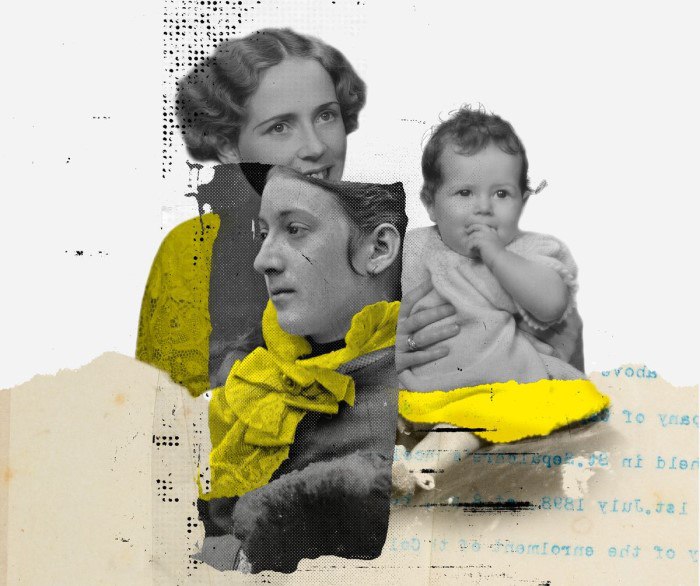
While Jack London wrote about human survival in the wilderness, Edith Wharton described survival in the jungle of high society. In her books, you will find cold stares and social isolation that hurt deeply.
Edith Wharton went down in history as the first woman to receive the Pulitzer Prize. Simply put, it's like an Oscar, but in the world of literature. This award confirmed that her stories about the lives of wealthy New York families were not just gossip, but profound drama. She proved that real battles take place not in war, but in luxurious living rooms over a cup of tea.
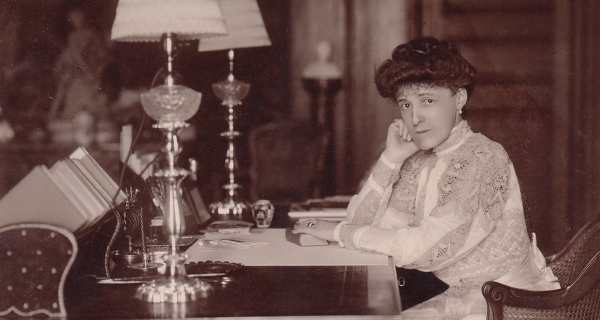
When we talk about the Gilded Age, we mean the period at the end of the 19th century. It was a time of incredible enrichment in America: railways were being built, the first millionaires were appearing, and New York was becoming the capital of luxury. Warton herself was born in 1862 into one of the richest families in the city. She knew this world from the inside: its glamour, expensive dresses, and cruel rules.
What prompted a woman from such a conservative circle to take up the pen? At that time, ladies of her status were expected to do only one thing: be the belle of the ball and a skilled homemaker. Writing was considered an inappropriate occupation for a true lady. Edith began to write to escape the loneliness of marriage and the boredom of a society that demanded her to be nothing more than a beautiful shadow.
Her social stories became a form of protest. She saw how unhappy people were hiding under a thin layer of gilding and wealth. Wharton wrote because she could not remain silent about the hypocrisy of a world where indifference was hidden behind a luxurious facade.

Studying Warthon's texts is ideal for developing high-level English communication skills. This is where the most important skill is developed: reading between the lines.
To understand the subtext in her works, pay attention to these concepts:
- Subtlety. In Wharton's world, a raised eyebrow can mean more than a long speech.
- Social constraints. Unwritten rules that dictate the behaviour of characters.
- Irony. Wharton often uses irony to show the absurdity of social norms.
- Implication. What is implied but not said aloud.
Although more than a hundred years have passed since Wharton's time, the rules of the game have not changed much. Our living rooms have moved to Instagram and Facebook, but the fear of being judged remains. Understanding the context in English through Wharton's prose helps us to better understand our interlocutors and see people's true motives.
Lessons from George Orwell: How literature develops critical thinking and English
Key works:
- The Age of Innocence (1920) is a masterpiece about a love triangle, where public opinion becomes the main enemy of feelings. It is a book about choosing between duty and passion.
- The House of Mirth (1905) is the tragic story of Lily Bart, who tries to stay in high society without money. It is a sharp criticism of how society consumes and discards people.
- Ethan Frome (1911) is a short novel that shows a different side of Wharton: harsh, rural, but just as psychologically accurate.
Learning to understand subtext is like gaining a superpower that allows you to see people's true motives.
As Edith herself wrote:
There are two ways of spreading light: to be the candle or the mirror that reflects it.
Develop your linguistic intuition. Read the classics, analyse the nuances and become someone who sees the world in all its diversity.
Join the English-speaking community SARGOI — a place where we teach you to understand not only words, but also what lies behind them.